Al-Qishlah Palace
Al-Qishlah Palace
A large two-story mud-brick fortress in central Hail built around 1941 CE in the reign of King Abdulaziz as a barracks and arms depot, later a prison, and now a major heritage landmark.
Plan your visit
Practical information verified separately from the historical record.
Before you go: Check with the operator or a local guide before departure; field access details have not yet been verified.
Why visit?
Tour Hail's best-known Najdi citadel with its courtyard, towers, plaster ornament, and story of unification-era military administration.
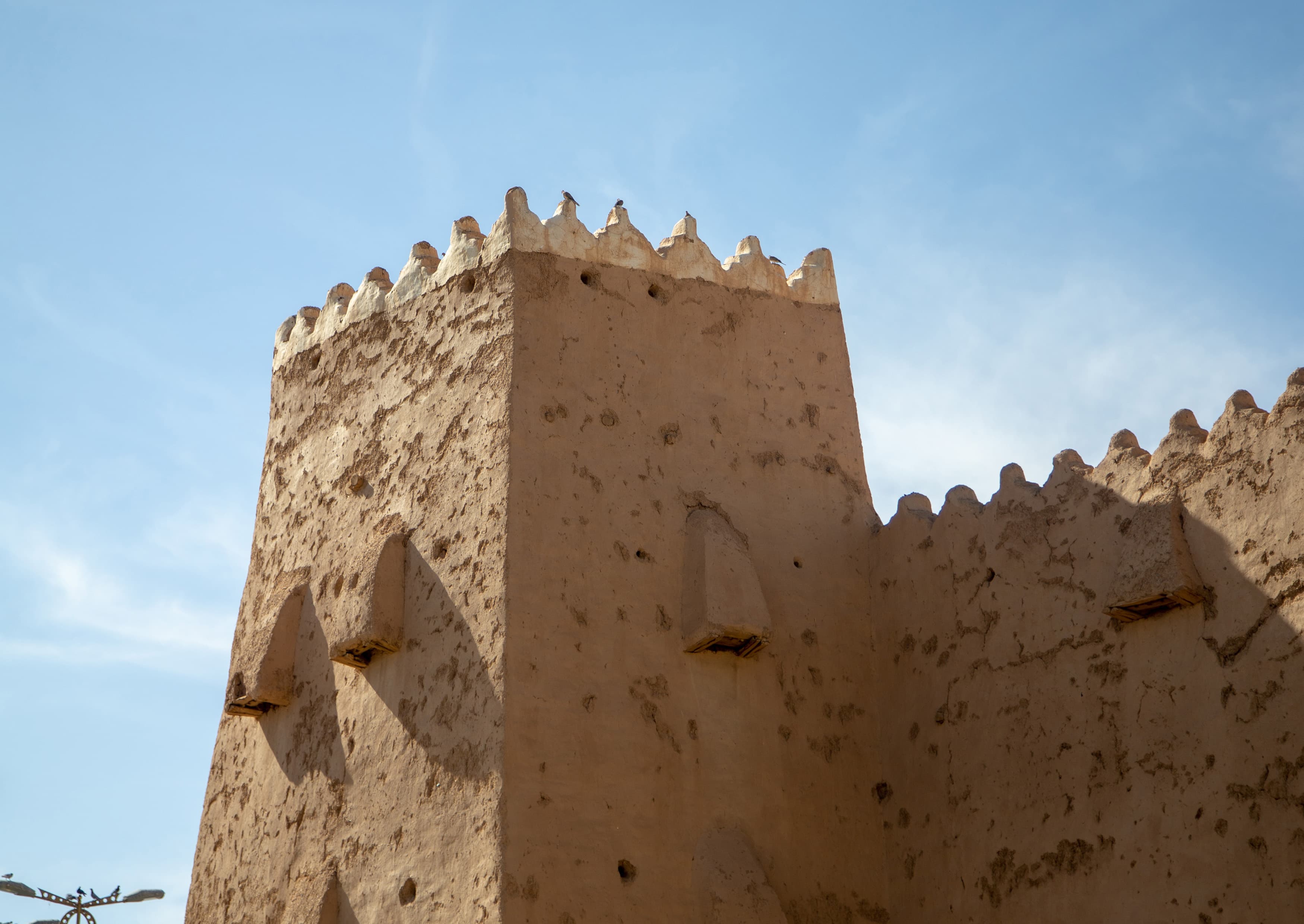
Qishlah Palace is a historic mud-brick fortress in the center of Hail city, constructed in the era of King Abdulaziz. Building began around 1360 AH (1941 CE) and finished within about eighteen months in the Najdi style while Prince Abdulaziz ibn Musaid governed Hail. The word qishlah derives from Turkish and means barracks; the palace was erected to house troops and store weapons, and later served as a prison.
The structure combines mud, libb, and stone with geometric and floral plaster decoration. A rectangular two-story block surrounds an open parade ground, with two main gates, corner towers, and long vaulted galleries typical of Najdi military architecture adapted to the needs of the consolidating Saudi state.
Today al-Qishlah ranks among Hail's foremost heritage monuments, narrating a chapter of unification history and hosting cultural events within walls that once disciplined and supplied the garrisons of northern Najd.