Shubra Palace
Shubra Palace
A historic palace in the Shubra quarter of Taif built by Sharif Ali Pasha around 1904-1906 in a style blending Hijazi, Islamic, and Romanesque elements, later a summer residence of Kings Abdulaziz and Faisal before becoming a museum in 1995.
Plan your visit
Practical information verified separately from the historical record.
Before you go: Check with the operator or a local guide before departure; field access details have not yet been verified.
Why visit?
Tour a rare architectural fusion that served the early Saudi kings and now introduces visitors to Taif's heritage as a Hijazi summer capital.
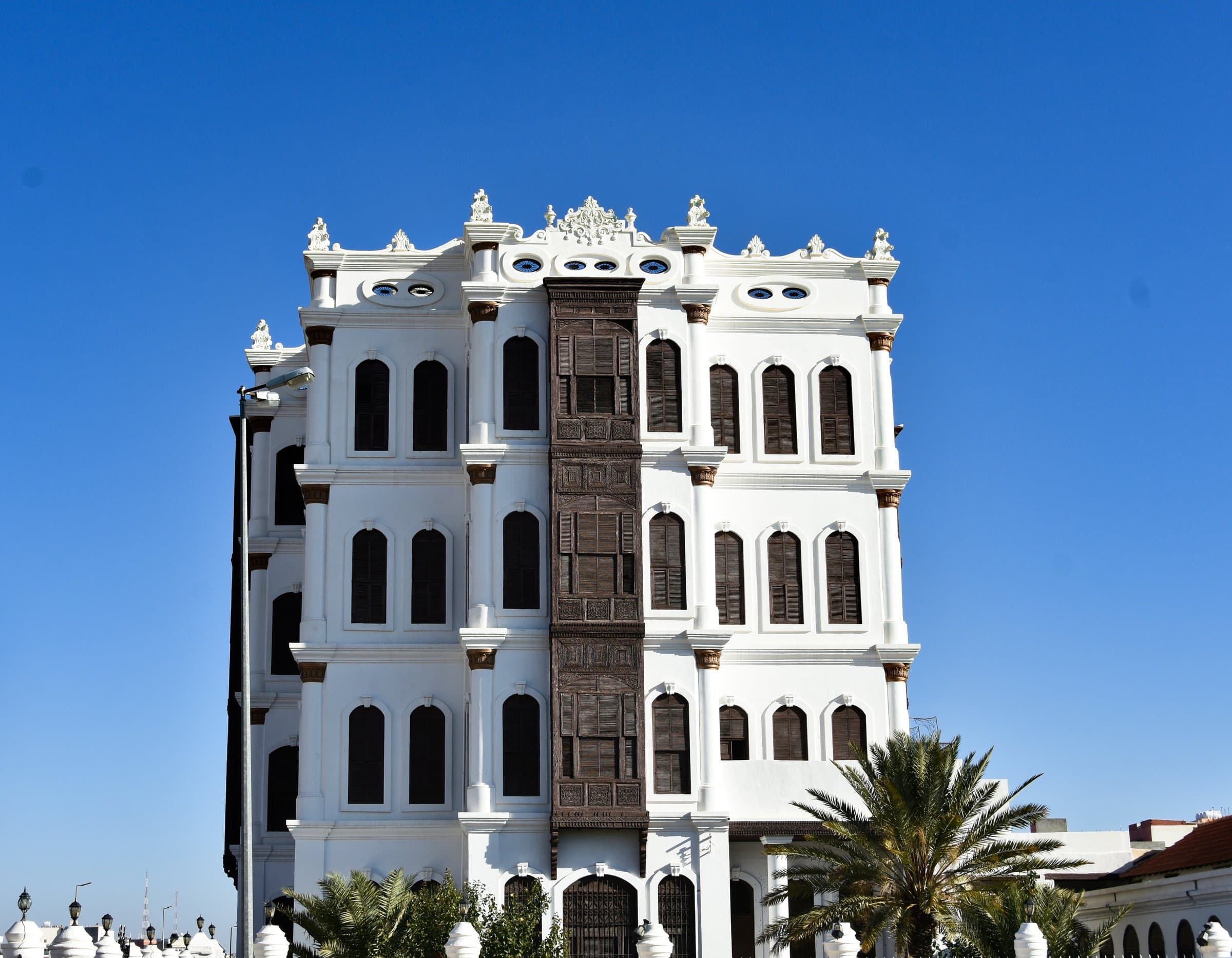
Shubra Palace is one of the most prominent historical palaces in Taif. Sharif Ali ibn Abdullah, former sharif of Mecca, began construction in 1323 AH (1904 CE) and completed it in 1324 AH (1906 CE). He named it Shubra after a palace in the Shubra district of Cairo that inspired its design.
The building rises four stories above a basement and contains roughly 150 rooms along with annexes and gardens. Its architecture combines Hijazi wooden rawashin and Islamic ornament with Romanesque columns capped in gilded capitals. A double wooden staircase in the main hall remains one of its signature features. Kings Abdulaziz and Faisal later used the palace as a summer residence during the formative decades of the modern kingdom.
In 1995 the palace opened as a public museum, preserving a building that embodies the cosmopolitan tastes of the late Ottoman Hijaz and the early Saudi state. It stands today as Taif's foremost monument to a era when mountain air, court ceremony, and transregional design met on the Hijaz escarpment.