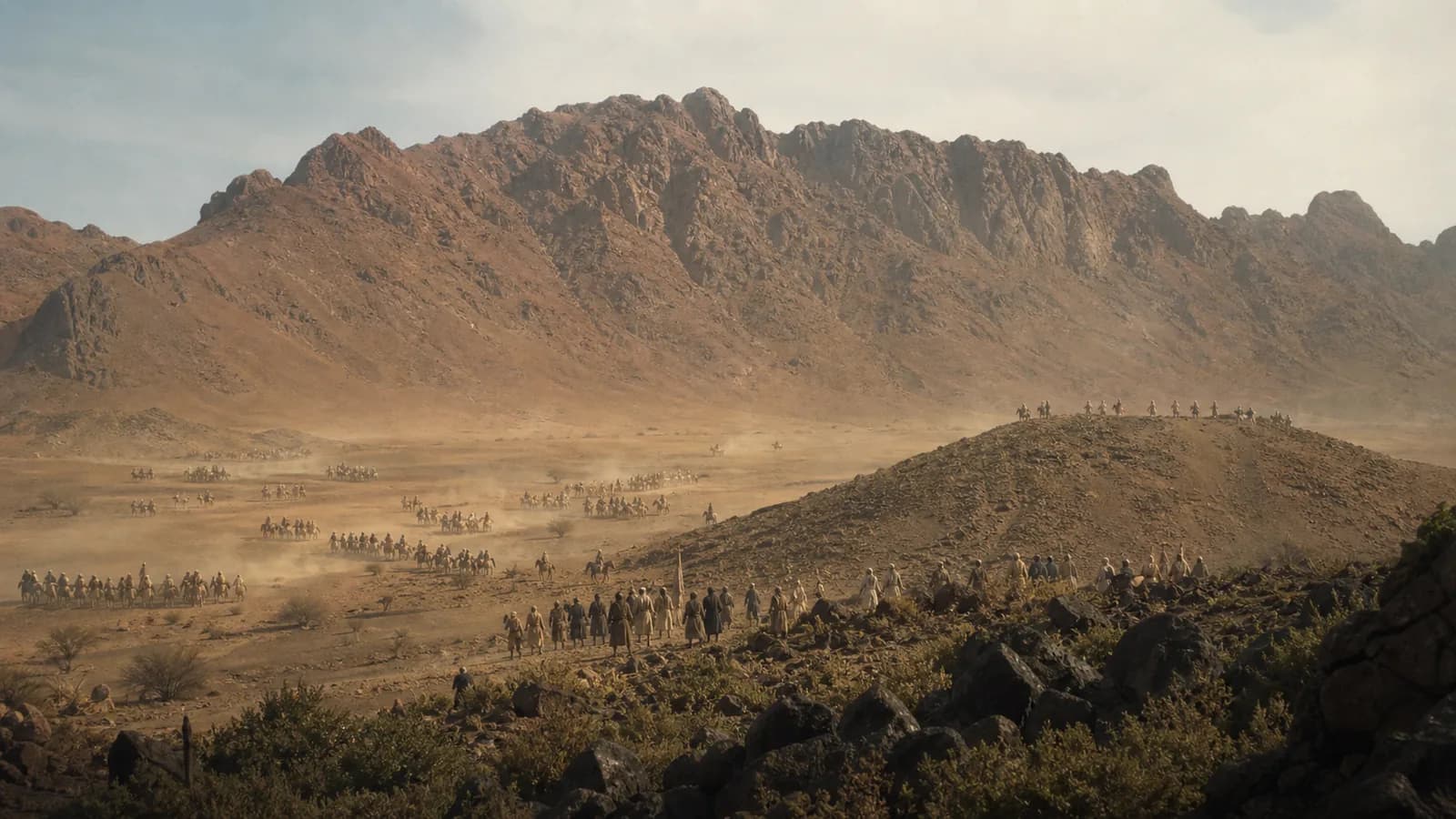
Mount Uhud
Mount Uhud
A major battle in 3 AH (625 CE) north of Medina in which Muslim archers leaving their posts turned initial success into a costly setback.
Plan your visit
Practical information verified separately from the historical record.
Before you go: Check with the operator or a local guide before departure; field access details have not yet been verified.
Why visit?
Walk the slopes of Mount Uhud where early Muslims fought and where many companions, including Hamza ibn Abd al-Muttalib, were martyred.
The Battle of Uhud was fought on Saturday, 7 Shawwal 3 AH (23 March 625 CE) on the plain and slopes north of Medina. A Quraysh force of roughly three thousand men, seeking revenge for their defeat at Badr, confronted a Muslim army of about one thousand. Early in the fight the Muslims gained the advantage, but a group of archers stationed on a hill disobeyed orders and descended to collect spoils, allowing Khalid ibn al-Walid to outflank them and reverse the battle.
The day ended with heavy Muslim losses, including the martyrdom of Hamza ibn Abd al-Muttalib, the Prophet's uncle, and dozens of other companions. The Prophet Muhammad ﷺ himself was wounded, and the battle became a lasting lesson in discipline, obedience, and the cost of abandoning strategic positions. Quranic verses later addressed the trial and the need for steadfastness after setback.
Mount Uhud and the adjoining battlefield remain among the most visited historical sites near Medina. The mountain, the cemetery of the martyrs, and the plain below preserve the geography of an engagement that shaped the early community's understanding of victory, sacrifice, and perseverance.