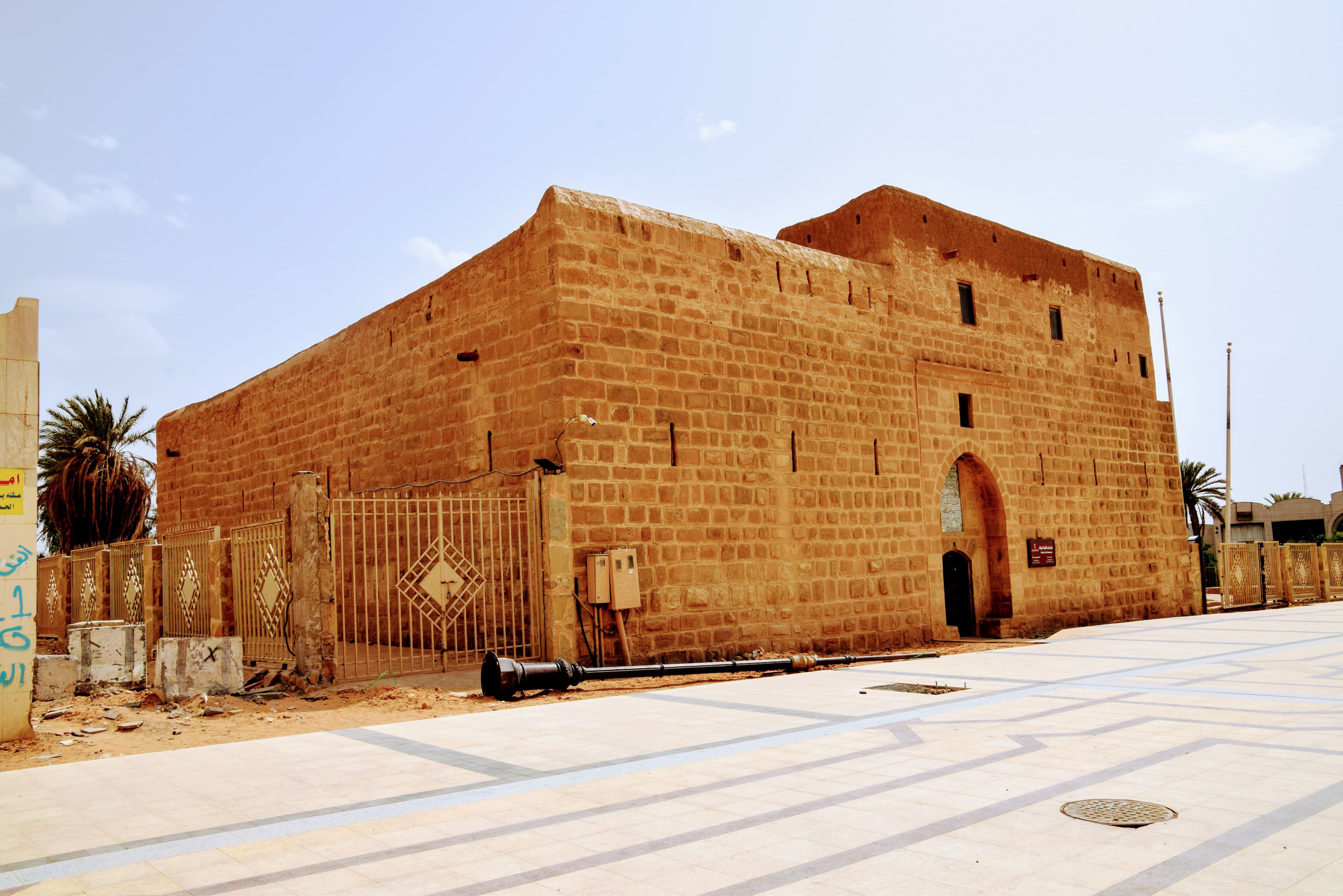
Tabuk Castle
Tabuk Castle
An Ottoman fortress in Tabuk city guarding the Syrian Hajj route and the strategic approaches to northwestern Arabia.
Plan your visit
Practical information verified separately from the historical record.
Before you go: Check with the operator or a local guide before departure; field access details have not yet been verified.
Why visit?
Tour the restored castle in the heart of Tabuk that controlled pilgrimage traffic and Ottoman administration on the Damascus–Mecca road.
Tabuk Castle stands in the center of Tabuk city in northwestern Saudi Arabia, on a site fortified long before the Ottoman period. The present structure reflects Ottoman military architecture of the sixteenth to eighteenth centuries, when Tabuk served as a key station on the Syrian Hajj route linking Damascus to Medina and Mecca. Pilgrims, couriers, and military detachments passed through the oasis, and the castle housed garrisons, stores, and administrative offices.
Its thick walls, towers, and gates were designed to protect the town and to oversee the road across the arid approaches from the Levant. Tabuk's location near the Hejaz railway later in the nineteenth century reinforced its importance as a logistical and political node in the Ottoman province of the Hijaz.
The castle has been restored and opened as a heritage landmark, offering visitors a concrete sense of how imperial power projected into the Arabian interior through forts, wells, and pilgrimage infrastructure. It remains one of the most recognizable historic monuments in the Tabuk region and a gateway to understanding the long history of the Hajj routes from the north.