Qaryat Al-Faw
Qaryat Al-Faw
Qaryat al-Faw (Dhat Kahil), south Najd at Wadi ad-Dawasir and Tuwaiq: Kindah’s capital and a full caravan city—UNESCO-listed in 2024.
Plan your visit
Practical information verified separately from the historical record.
Access: موقع أثري واسع وغير مطروح كدخول حر؛ استخدم التجربة الرقمية حتى إعلان ترتيبات رسمية.
Before you go: Check with the operator or a local guide before departure; field access details have not yet been verified.
Why visit?
Al-Faw is the clearest surviving picture of a pre-Islamic Arabian city in the peninsula’s heart—urban plan, murals, temple, palace on the Empty Quarter’s edge. UNESCO 2024 recognized outstanding universal value.
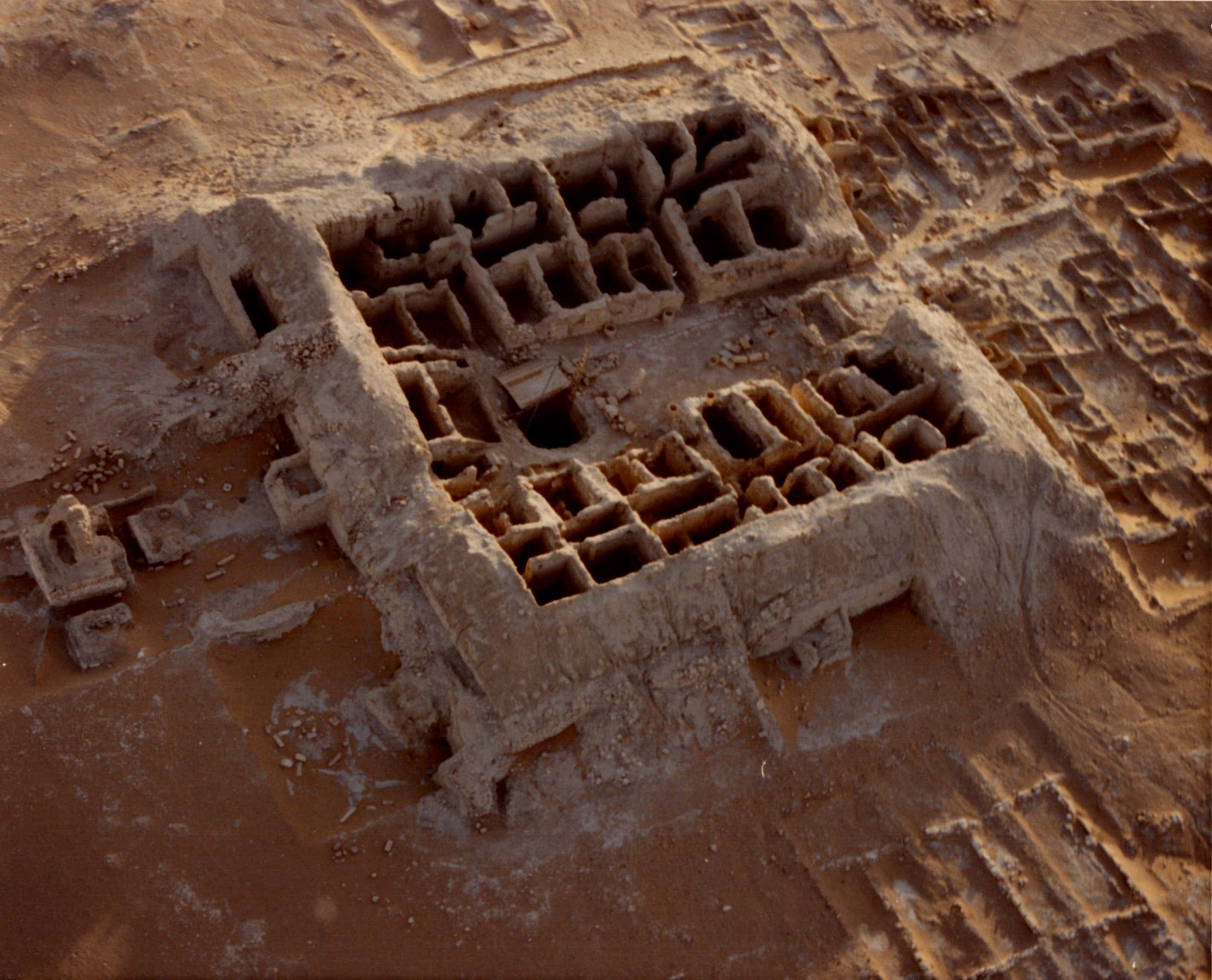
At the NW edge of the Empty Quarter, where Wadi ad-Dawasir meets the Tuwaiq escarpment at a gap called al-Faw, stood the city known in antiquity as Dhat Kahil—today Qaryat al-Faw.

Kindah’s capital
Kindah used al-Faw as a seat roughly from the 4th century BCE to the 4th century CE. The old name links to the deity Kahl known in South Arabian inscriptions. This was a capital of politics, trade, and cult—not a mere waypoint.
A planned city
Excavations (including King Saud University work and later national teams) revealed residential quarters, a market, a palace, temples, and elite and common cemeteries, with murals, vessels, and inscriptions. Irrigation and a small oasis made life possible on the sand’s edge.
Khashm Qaryah
East of the settlement, on the Tuwaiq face, a stone temple, votive inscriptions, and an offering table extend the sacred landscape beyond the town core.
UNESCO 2024
On 27 July 2024 the Cultural Landscape of Al-Faw Archaeological Area entered the World Heritage List as Saudi Arabia’s eighth property—an outstanding record of human–environment interaction from protohistory through pre-Islamic kingdoms.
For the visitor
Al-Faw is layers: Kindah, caravan, temple, cemetery, and desert that preserved the plan. South Najd was not a margin; it was a capital written on wall, pottery, and road.