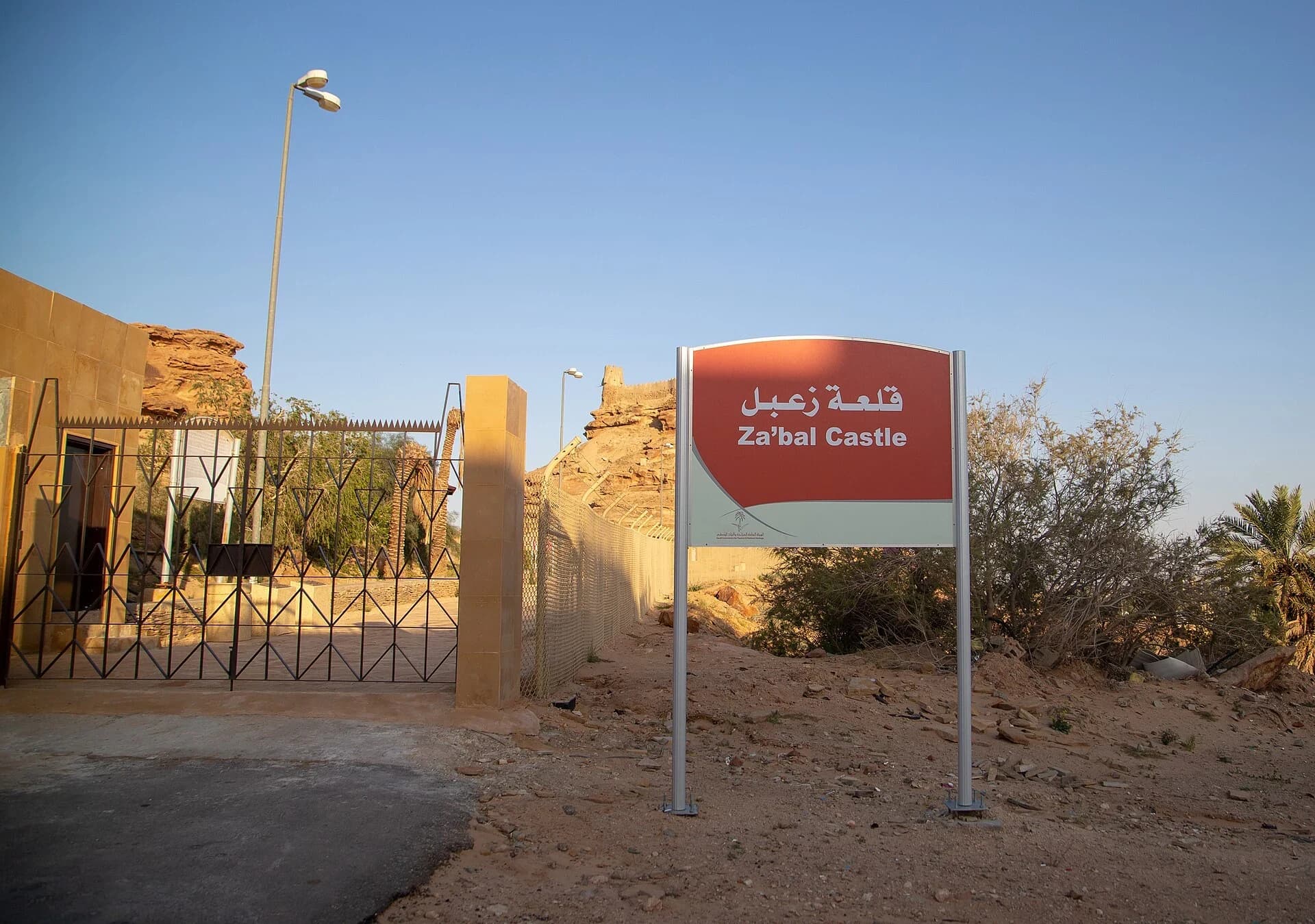
Zaabal Castle
Zaabal Castle
A fort on a crag north of Sakaka, watching the Syria–Iraq corridor. Early pottery in al-Jawf is a layer; the standing work is a late Islamic–Najdi keep rebuilt for watch, not a Nabataean temple.
Plan your visit
Practical information verified separately from the historical record.
Before you go: Check with the operator or a local guide before departure; field access details have not yet been verified.
Why visit?
Shows Jawf as a road-knot, not only Dumat’s oasis — if pottery is not pinned to every standing wall.
Zaabal stands on a crag north of Sakaka in al-Jawf. The site explains the job: one eye on the oasis, one on the Syria–Sirhan–Iraq road. Visible work is local stone, walls and towers for watch, not long dwelling.
Modern copy often folds Jawf’s Nabataean pottery and inscriptions into this keep. Not every height at Sakaka is Nabataean because the province is. Official notices speak of a long watch on the summit. Fairer: the rise is old ground; the standing fort is late Islamic fabric, repaired more than once.
It is not Marid. Marid belongs to Dumat and the Mosque of Umar; this belongs to Sakaka and its road. The photograph used here is the keep itself.