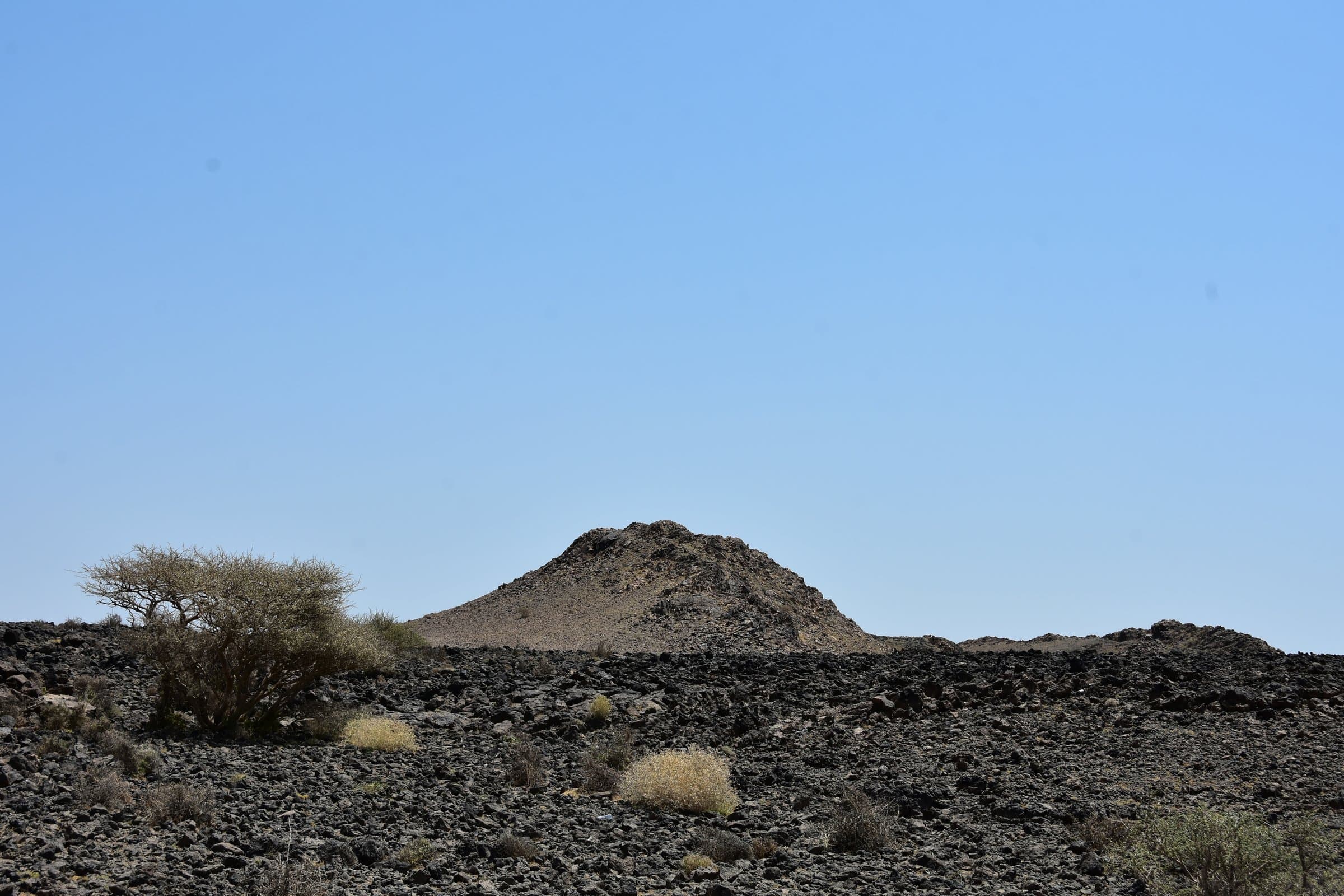
Al-Raqmatan
Al-Raqmatan
A place name, or pair of place names, celebrated in the poetry of Zuhayr, al-Nabigha, and Amr ibn Madi Karb. Classical geographers disagreed on whether it lay near Medina, Basra, or the Samman desert.
Plan your visit
Practical information verified separately from the historical record.
Before you go: Check with the operator or a local guide before departure; field access details have not yet been verified.
Why visit?
Study a celebrated toponym of pre-Islamic Arabic poetry and the scholarly debate over how many distinct places shared this evocative name.
Al-Raqmatan is the dual form of al-Raqmah, meaning land of mixed colors or a grassy meadow compared to patterned tattooing. It appears in pre-Islamic poetry as a setting for ruined homesteads and lost love. Zuhayr ibn Abi Sulma is credited with the line comparing dwellings at al-Raqmatan to the traces of tattooing on a woman's forearm. Amr ibn Madi Karb links the name to the Samman region beside al-Sullan, and al-Nabigha al-Dhubyani also mentions it in his verse.
Geographers were divided on its location. Yaqut al-Hamawi, citing al-Asma'i, reported that al-Raqmatan referred to two places: one near Medina and another near Basra. Other sources associate the name with meadows in the Samman, villages on the edge of Wadi Falj, or land belonging to Banu Hanẓalah. Because the same name appears in different regions, scholars treat it as a shared poetic toponym rather than a single fixed site.
For students of Arabic literature and historical geography, al-Raqmatan illustrates how powerfully place names could live in poetry even when their exact coordinates remained uncertain. The verses are secure; the map is not.