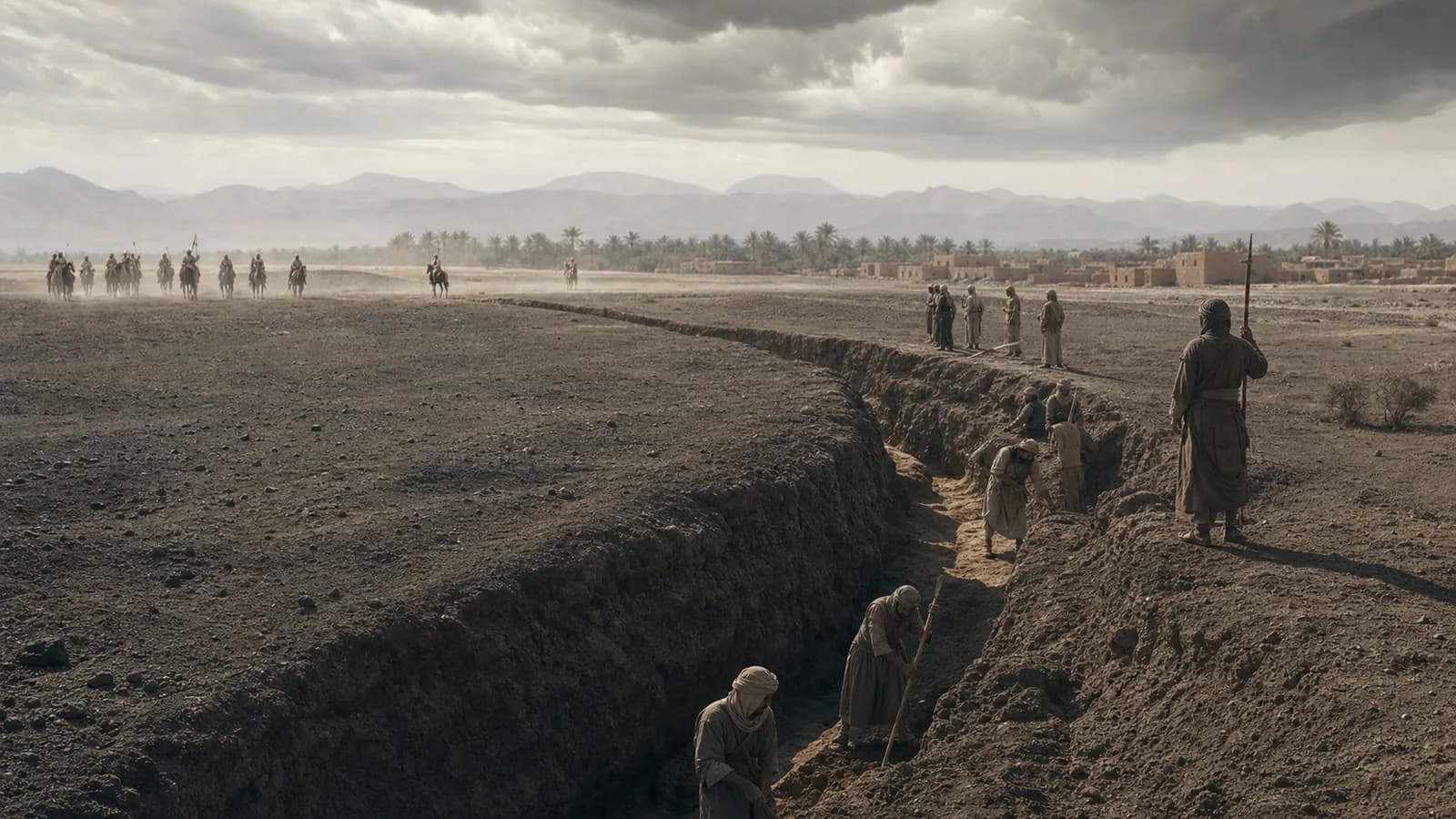
Site of the Trench
Site of the Trench
The 5 AH (627 CE) siege of Medina in which Salman al-Farsi's advice to dig a defensive trench broke the confederate assault.
Plan your visit
Practical information verified separately from the historical record.
Before you go: Check with the operator or a local guide before departure; field access details have not yet been verified.
Why visit?
Explore the northwestern approaches to Medina where the trench was dug and a coalition of Arab tribes and allies was turned back without a pitched battle.
In Shawwal 5 AH (March 627 CE), a coalition of Quraysh, Ghatafan, and allied tribes marched on Medina in what Muslim sources call the Battle of the Trench or the Battle of the Confederates. Facing a force far larger than their own, the Muslims adopted a strategy uncommon in Arabian warfare: under the counsel of Salman al-Farsi, they dug a wide trench across the northern and northwestern approaches to the city, neutralizing cavalry charges and forcing the besiegers to camp in a stalemate.
The siege lasted roughly two weeks. Harsh winds, failed negotiations, and internal discord among the allies weakened the coalition, while the trench held firm. The campaign ended without a decisive field battle, marking a strategic turning point that strengthened Medina and diminished the prestige of its enemies. The event is commemorated in the Quran as the Trial of the Confederates.
Salman al-Farsi's role linked Persian engineering knowledge to the defense of the young Muslim polity and made him a celebrated figure in Islamic memory. The episode is associated with the northern outskirts of Medina, where visitors and scholars trace the general line of the trench and reflect on a defense that relied on planning and patience as much as on arms.