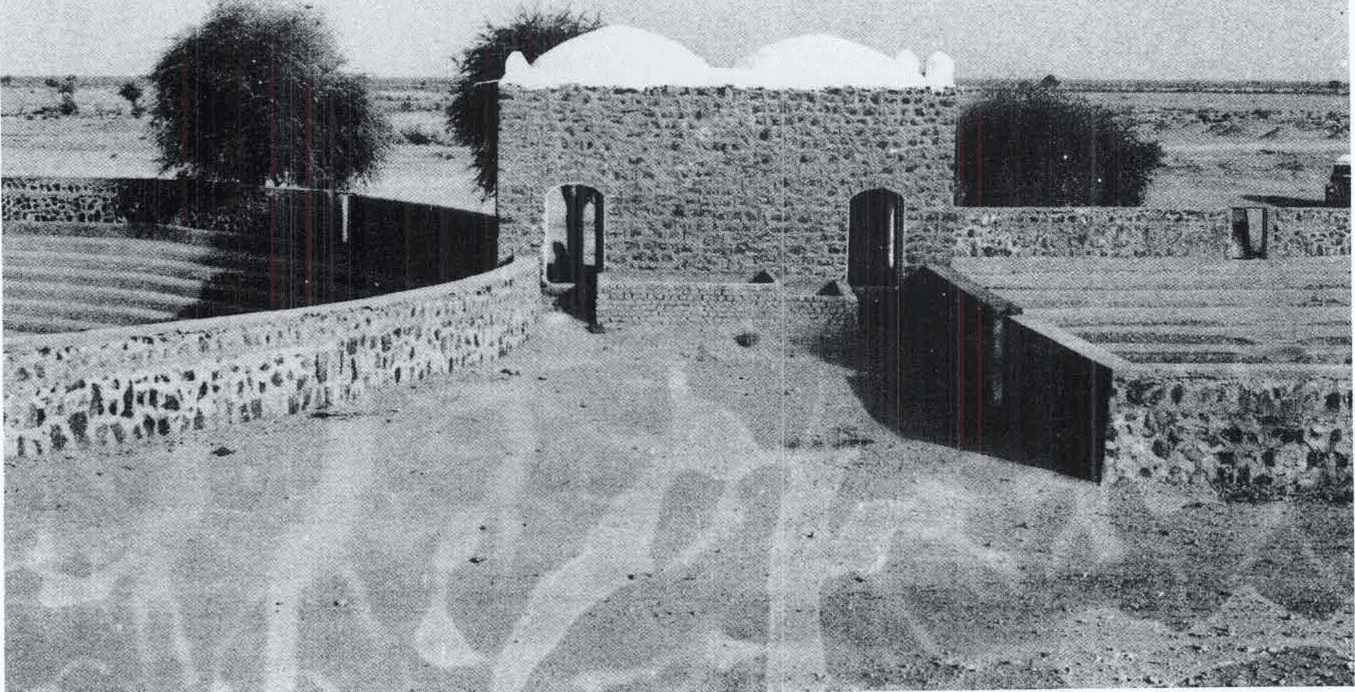
Wajra
Wajra
One of the finest Abbasid water stations on the Hajj roads, on the Basran route with a main pool forty to fifty meters across, a settling basin, and a fifteen-kilometer channel to Wadi al-Aqiq. King Faisal ordered its restoration in 1393 AH.
Plan your visit
Practical information verified separately from the historical record.
Access: موضع طريق تاريخي غير مهيأ؛ لا توجد خدمات أو نقطة دخول معتمدة.
Before you go: Check with the operator or a local guide before departure; field access details have not yet been verified.
Why visit?
Admire one of the best-preserved Hajj pools in Arabia and the place where the Kufan and Basran roads converged near Mecca.
Wajra, also called Qasr al-Kharaba, is a remarkable Abbasid water station on the Basran Hajj road, fifteen kilometers east of Ghamra. Its main pool measures forty meters at the base and fifty meters at the top, with a settling basin of twenty-five by thirty-eight meters and a fifteen-kilometer water channel reaching Wadi al-Aqiq. The Kufan and Basran Hajj roads met near this area before the final approach to Mecca.
King Faisal ordered restoration of the pool in 1393 AH (1973 CE), reviving its stone base after centuries of use and decline. Modern field documentation began with Atiq al-Baladi in 1399 AH and continued with Dr. Sa'd al-Rashid in 1414 AH. The station illustrates how both imperial Abbasid planning and modern Saudi conservation have kept Hajj infrastructure alive.
Wajra is among the most beautiful surviving pools on the Hajj roads and one of the most important engineering links between Iraq and the Hijaz.