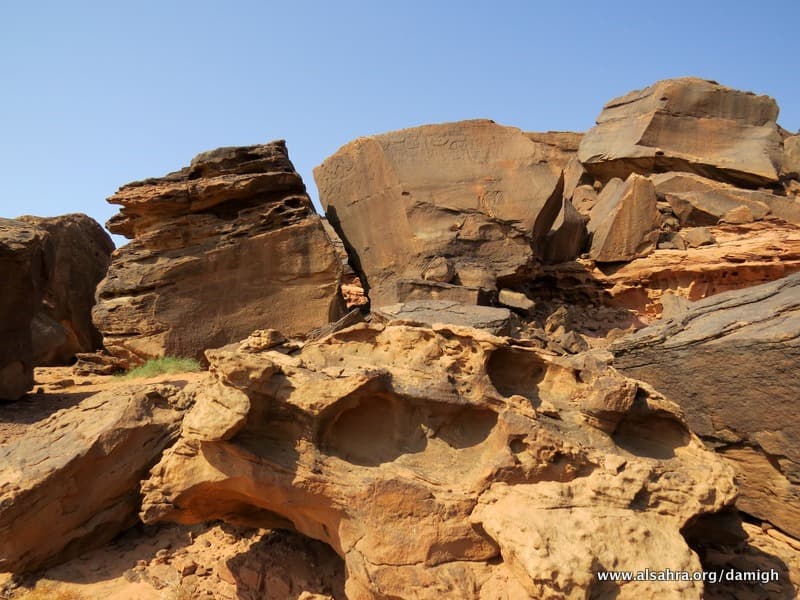
Rata and Al-Manjour
Rata and Al-Manjour
Prehistoric rock art panels in the Khaybar region depicting hunters, animals, and symbols across thousands of years.
Plan your visit
Practical information verified separately from the historical record.
Before you go: Check with the operator or a local guide before departure; field access details have not yet been verified.
Why visit?
See some of the richest open-air rock art in the Arabian Peninsula.
The rock art sites of Rata (Raat) and al-Manjour lie within the Harrat Khaybar region, where ancient artists engraved and pecked images into basalt outcrops over many millennia. The panels depict cattle, ibex, hunting scenes, anthropomorphic figures, and abstract symbols that reflect changing environments and human cultures from the Neolithic through later periods.
These sites belong to a wider corpus of Arabian rock art that has transformed understanding of pre-Islamic Arabia — showing that the peninsula supported pastoral, hunting, and possibly agrarian communities long before the rise of Islam. The volcanic surfaces of the harrat preserved engravings that would have eroded elsewhere.
Rata and al-Manjour are increasingly studied and documented as part of Saudi Arabia's archaeological heritage. They offer visitors a direct encounter with the deep human past of the Khaybar landscape, complementing its Islamic and geological significance.
Historical milestones
Related events
تربط جبة والشويمس وحمى وراطا والمنجور كتعبيرات مبكرة عن الإنسان والحيوان والطريق والذاكرة في الجزيرة.
تجمع المصائد والمنشآت والمدافن والفن الصخري كدليل على تنظيم مبكر للمكان قبل ظهور المدن والممالك.