Jebel Al-Qidr Volcano
Jebel Al-Qidr Volcano
Jebel al-Qidr is a volcanic landmark that helps explain western Arabia’s lava fields (harrat) as living historical landscapes.
Plan your visit
Practical information verified separately from the historical record.
Before you go: Check with the operator or a local guide before departure; field access details have not yet been verified.
Why visit?
Climb a volcanic peak that dominates the Khaybar landscape and shaped regional geography.
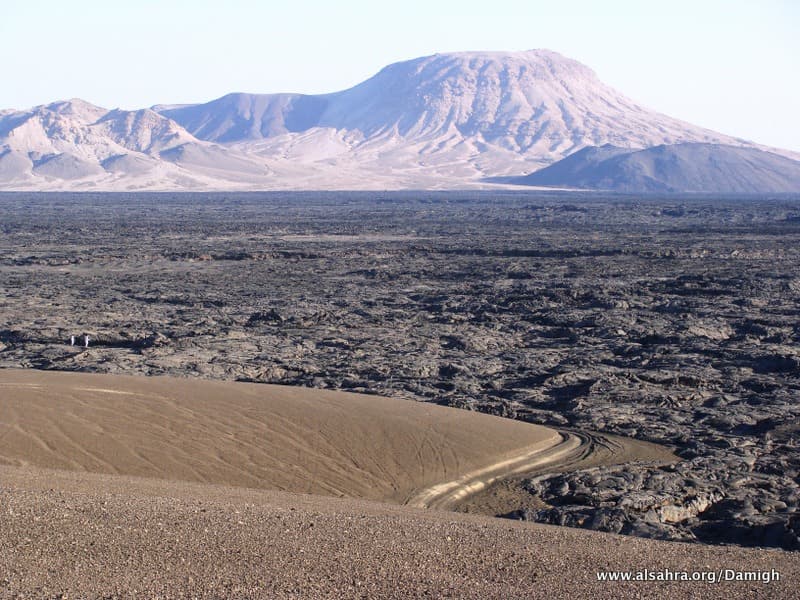
Jebel al-Qidr is one of the most recognizable volcanic cones in Harrat Khaybar, rising above the surrounding lava fields with a well-defined crater and slopes of dark basalt. The name al-Qidr (the pot or cauldron) evokes the volcanic crater's shape. The cone formed during Holocene eruptions that reshaped the northwest Hijaz.
Volcanoes like al-Qidr contributed to the fertile conditions at nearby Khaybar oasis, where fractures in the volcanic bedrock trap and channel groundwater to the surface. The relationship between eruption, lava, and life-giving springs is central to understanding why oases flourished in otherwise arid volcanic terrain.
The volcano is a landmark for travelers crossing the harrat and a focus for geological study of Arabian volcanism. It connects the sacred history of Khaybar with the deep earth processes that continue to define the region's character.
Historical milestones
Related events
تربط هذه القصة الحرات البركانية في شمال وغرب الجزيرة بوصفها مشهداً طبيعياً شكّل الحركة والطرق والخيال المحلي.
تضم لابة أوثنان إلى طبقة الحرات لتوضح أن الجيولوجيا ليست زخرفة، بل عنصر يفسر الطريق والذاكرة.