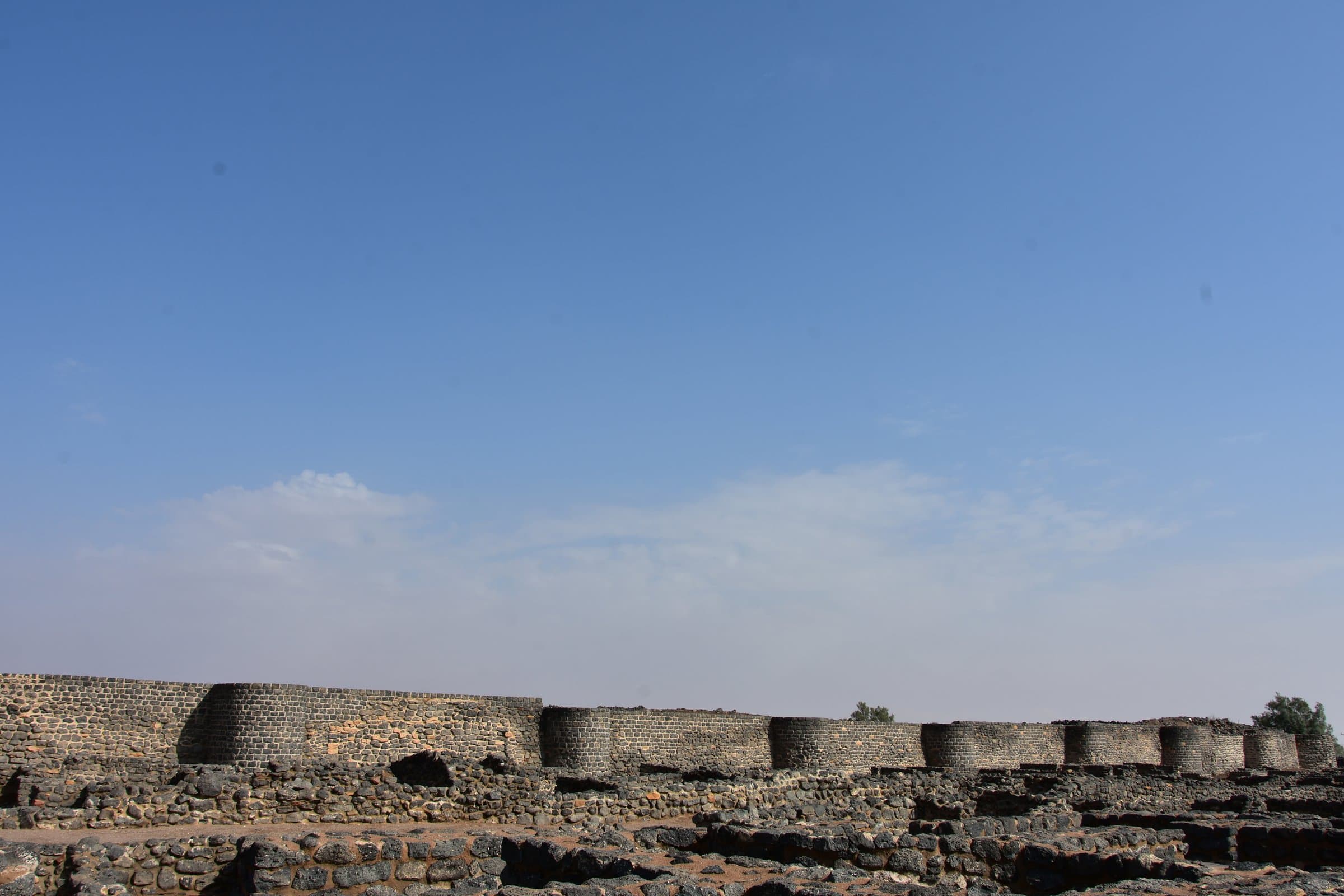
Al-Khudrma
Al-Khudrma
An ancient al-Yamama town once called Jaw and Jaw al-Khudrma, mentioned in the Adnanite Himyarite inscription around 360 CE and later capital of a Zaydi state under Muhammad ibn Yusuf al-Akhdar, now a sand-buried tell with rare architectural and ceramic remains.
Plan your visit
Practical information verified separately from the historical record.
Before you go: Check with the operator or a local guide before departure; field access details have not yet been verified.
Why visit?
Explore a tell that spans pre-Islamic inscriptions, early Islamic settlement, and a medieval Zaydi emirate at the edge of modern al-Yamama village.
Al-Khudrma is among the oldest settlements in the heart of Arabia, situated in historic al-Yamama in al-Kharj governorate about one kilometer northeast of present-day al-Yamama village. It was known in antiquity as Jaw and later Jaw al-Khadarim, names linked to pre-Islamic tribes such as Tasm and Jadis. The site appears in the inscription of King Adnan of Himyar around 360 CE, placing it among the earliest historically attested places on the peninsula.
In 252 AH (866 CE) Muhammad ibn Yusuf al-Akhdar al-Alawi made al-Khudrma the capital of a Zaydi emirate that endured for two centuries, adding a medieval political chapter to its deep antiquity. Today the town survives chiefly as an archaeological tell partially buried by sand, yielding architectural fragments and ceramics that speak to successive occupations.
Al-Khudrma compresses thousands of years of Arabian settlement into a single mound: from South Arabian epigraphy through tribal Jaw to an Islamic-era principality whose ruins still await fuller excavation.