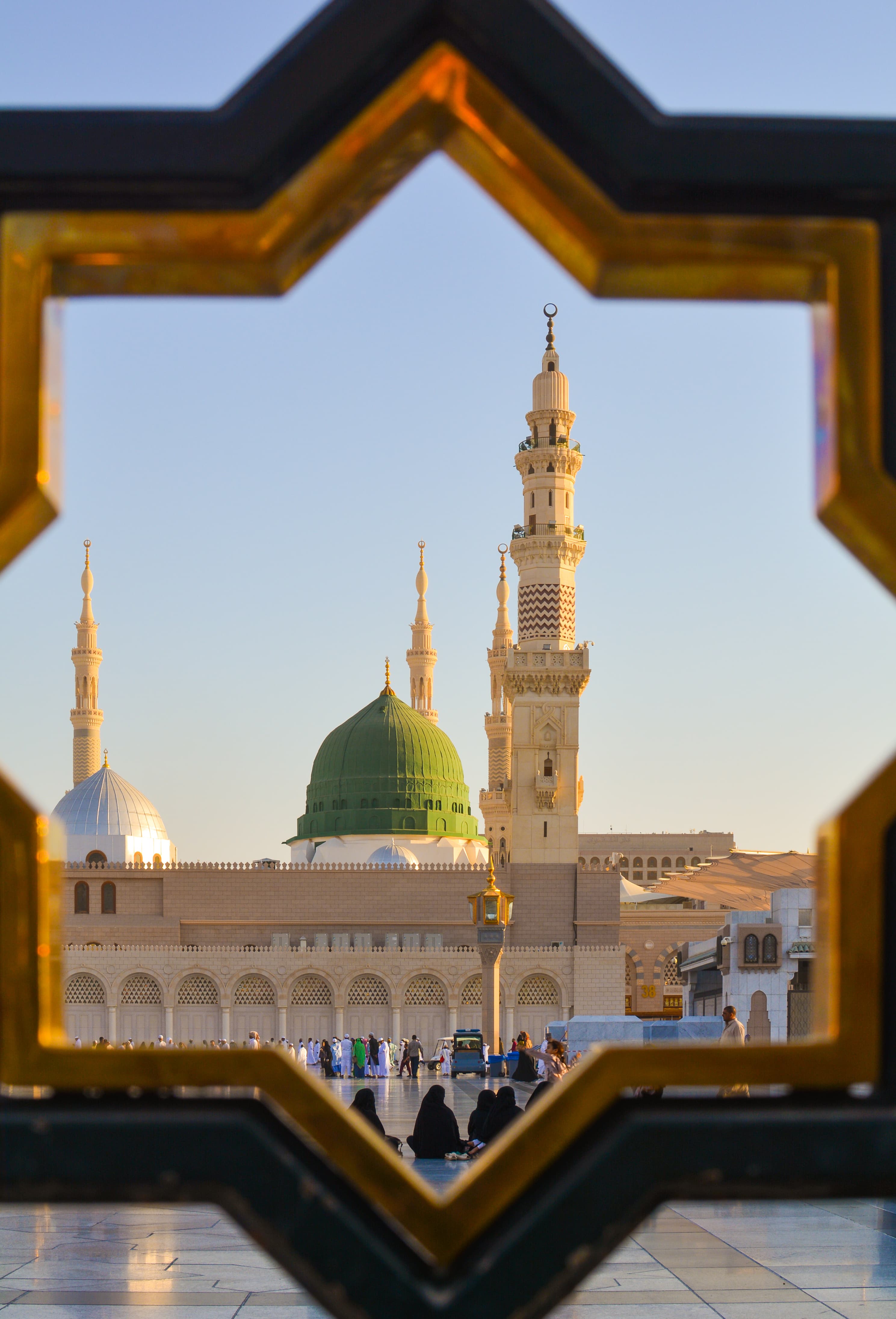
Al-Masjid an-Nabawi
Al-Masjid an-Nabawi
The Prophet’s Mosque in Madinah—second of the Two Holy Mosques—holds the Rawdah and the Prophet’s chamber, the heart around which the city grew after the Hijra.
Plan your visit
Practical information verified separately from the historical record.
Access: الوصول عبر ساحات المسجد ومواقف ونقل المدينة وفق تنظيمات الحشود.
Before you go: Check with the operator or a local guide before departure; field access details have not yet been verified.
Why visit?
After the Sacred Mosque, no journey is more cherished than to this one. It is living Prophetic memory—prayer, community, and the birth of Madinah. Every visitor to the Two Holy Mosques feels its pull.
In central Madinah the Prophet’s Mosque rises in white and green, yet its meaning is older than its dome. Here the Prophet ﷺ laid out his mosque after the Hijra; his chamber was joined to it; and from its courtyard grew Madinan society.

Foundation
Built of mud brick and palm after the camel halted at the marbad, the mosque was prayer hall, school, shelter for the poor (Ahl al-Suffah), and civic center. Caliphs and later dynasties expanded it while guarding the Rawdah’s sanctity.
Rawdah and chamber
Between pulpit and noble grave lies the Rawdah. The Prophet’s chamber, resting place of ﷺ and later Abu Bakr and Umar, draws visitors from every continent.
Saudi expansions
Modern Saudi expansions added vast plazas, shade umbrellas, and capacity for hundreds of thousands, under the Authority for the Two Holy Mosques.
On the map
Linked to Quba, Uhud, and al-Baqi, the mosque is Madinah’s second pole after Makkah’s haram—the city of Hijra, support, and farewell.