Burqat Thahmad
Burqat Thahmad
A place named in the opening verse of Tarafa ibn al-Abd's mu'allaqah. Burqah denotes shimmering, stone-mixed ground, while Thahmad remains a disputed toponym among classical geographers.
Plan your visit
Practical information verified separately from the historical record.
Before you go: Check with the operator or a local guide before departure; field access details have not yet been verified.
Why visit?
Encounter one of the most famous opening lines in pre-Islamic Arabic poetry and the geographical puzzle behind Tarafa's beloved Khawlah.
Tarafa ibn al-Abd opens his mu'allaqah with the lines: "For Khawlah there are ruins at Burqat Thahmad / gleaming like the remnant of tattooing on the back of a hand." He compares the traces of his beloved's camp to the lasting mark of tattooing on the palm, one of the most quoted images in Arabic literature.
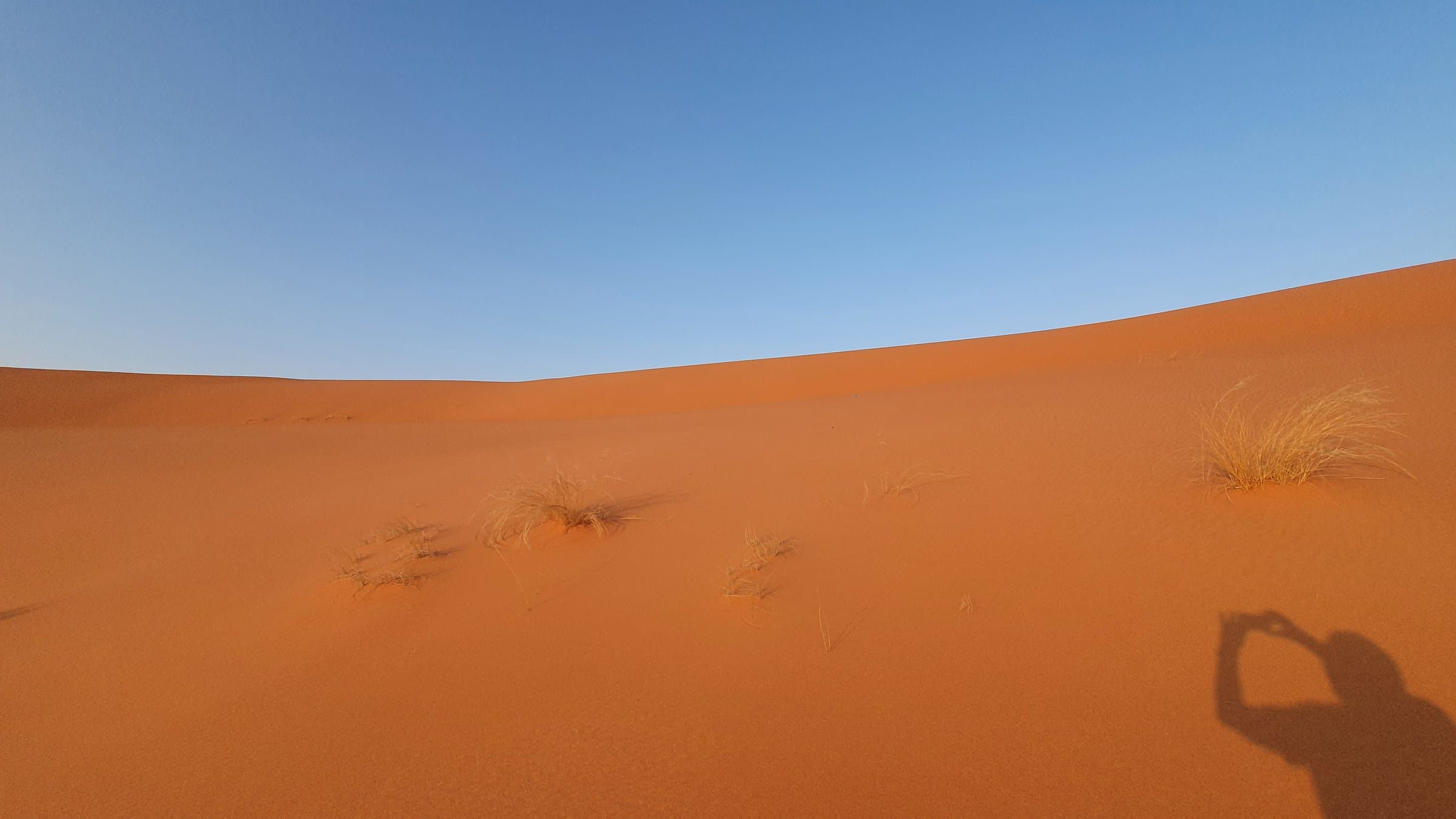
Burqah, or al-Abariq, describes land where soil mixes with stones or sand so that it glitters under the sun in many colors. Thahmad is the place-name to which this burqah belongs. Commentators offered different locations: some placed it in the lands of Banu Amir, others described it as a red mountain surrounded by shimmering slopes. Yaqut al-Hamawi listed it among the burq without fixing a precise coordinate. Because Tarafa belonged to Bakr ibn Wa'il, whose homeland lay toward eastern Arabia and the edges of Najd, some scholars favor that direction, though certainty remains elusive.
Burqat Thahmad holds exceptional literary value as the opening of Tarafa's mu'allaqah. For visitors and scholars alike, it is a reminder that the geography of Arabic poetry often outlives the map.