Dadan
Dadan
The archaeological zone at al-Ula associated with the ancient kingdom of Lihyan and its capital, Dadan.
Plan your visit
Practical information verified separately from the historical record.
Access: نقطة الالتقاء مركز زوار دادان؛ الدخول إلى الموقع عبر الجولة المنظمة.
Before you go: Check with the operator or a local guide before departure; field access details have not yet been verified.
Why visit?
Tour the tombs, inscriptions, and sanctuary remains of Lihyan at Dadan, predecessor kingdom to Nabataean Hegra in al-Ula.
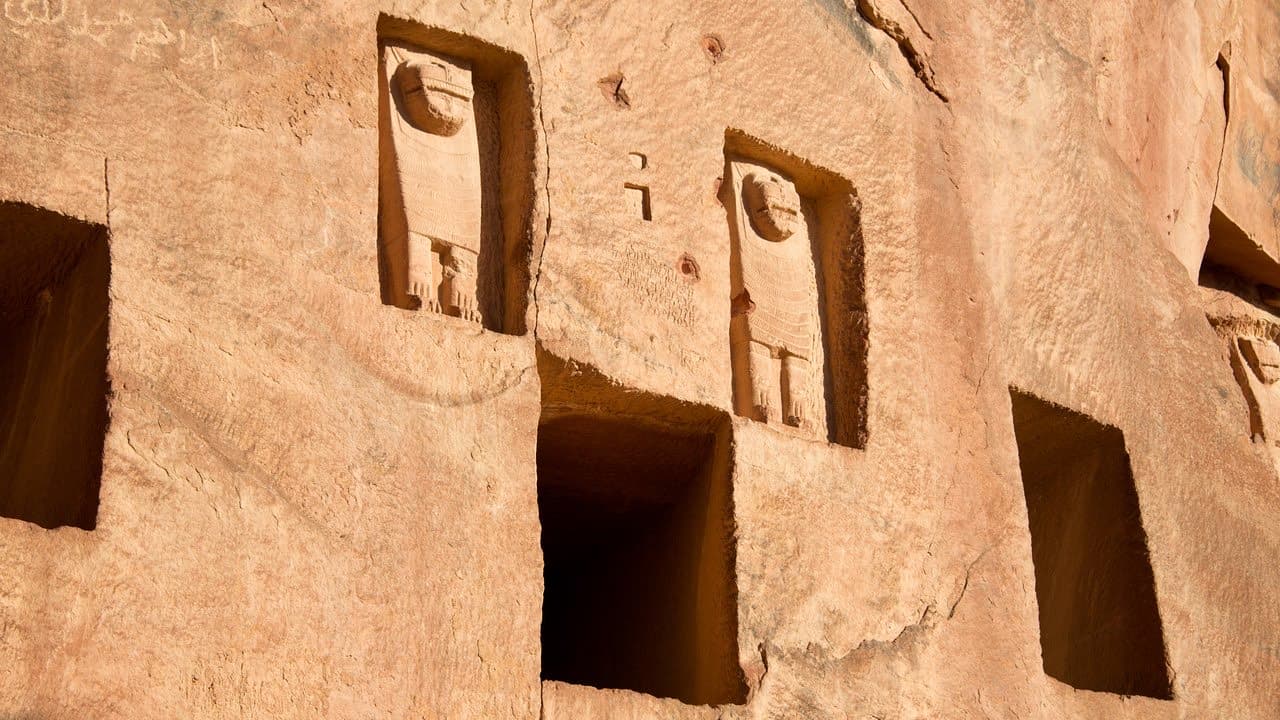
Dadan, in the al-Ula valley of northwestern Saudi Arabia, was the capital of the kingdom of Lihyan, which flourished from roughly the seventh to the second century BCE. The Lihyanites left rock-cut tombs, monumental inscriptions in Dadanitic script, and cultic installations that predate the better-known Nabataean city of Hegra nearby. Their kingdom controlled key stretches of the incense route and linked northern Arabia to the cultural world of the South Arabian kingdoms.
Excavations and conservation work have opened sections of the site to visitors, revealing urban planning, necropolises, and religious architecture carved into the sandstone. Dadanitic inscriptions record royal names, dedications, and legal texts that illuminate a sophisticated polity often overshadowed by Nabataean and Roman-era remains in the same valley.
As part of the al-Ula heritage landscape, Dadan is essential for understanding the deep chronology of the region: long before Hegra's tombs, Lihyan ruled the oasis and shaped the trade and ritual life of northwest Arabia. The site anchors the pre-Nabataean chapter of al-Ula's story and demonstrates how multiple kingdoms succeeded one another in a single fertile corridor.