Ma'dan al-Naqra
Ma'dan al-Naqra
An Abbasid Hajj station also known as al-Jufniyya, marked by a historic economic rivalry with neighboring Ma'dan al-Qurashi that produced two parallel routes. In 604 AH the catastrophe known as Sadr Jahannam claimed more than five thousand pilgrims in a single season.
Plan your visit
Practical information verified separately from the historical record.
Before you go: Check with the operator or a local guide before departure; field access details have not yet been verified.
Why visit?
Understand how commercial competition reshaped the Kufan Hajj road and visit a station tied to one of the deadliest disasters in pilgrimage history.
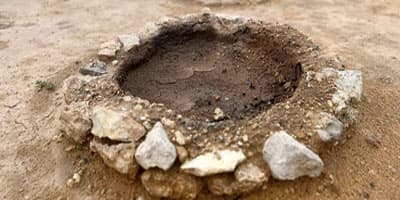
Ma'dan al-Naqra, or al-Jufniyya, stood on the Darb Zubayda above Wadi al-Jufniyya. It included a circular reservoir, falaj channels, and mile markers set along the irrigation lines. About fifteen kilometers to the northwest lay Ma'dan al-Qurashi, fortified with ditches, walls, and two gates for security. Economic rivalry between the merchants of the two stations led pilgrims to follow different paths along the route.
In 273 AH the station's founder, al-Musayyib ibn Sulayman, was assassinated and the fortress destroyed. Ibn Jubayr visited in 578 AH (April 1178 CE) and found the reservoir full of water. The most catastrophic event came in 604 AH, when more than five thousand pilgrims perished at Sadr Jahannam in a single Hajj season. Archaeologists have documented the falaj channels and stone-paved mile markers that guided caravans across this harsh terrain.
Ma'dan al-Naqra is a rare case study in how economic competition altered the geography of the Hajj. Its engineering works and the tragedy of 604 AH make it one of the most instructive stations on the Kufan road.