Harrat Rahat
Harrat Rahat
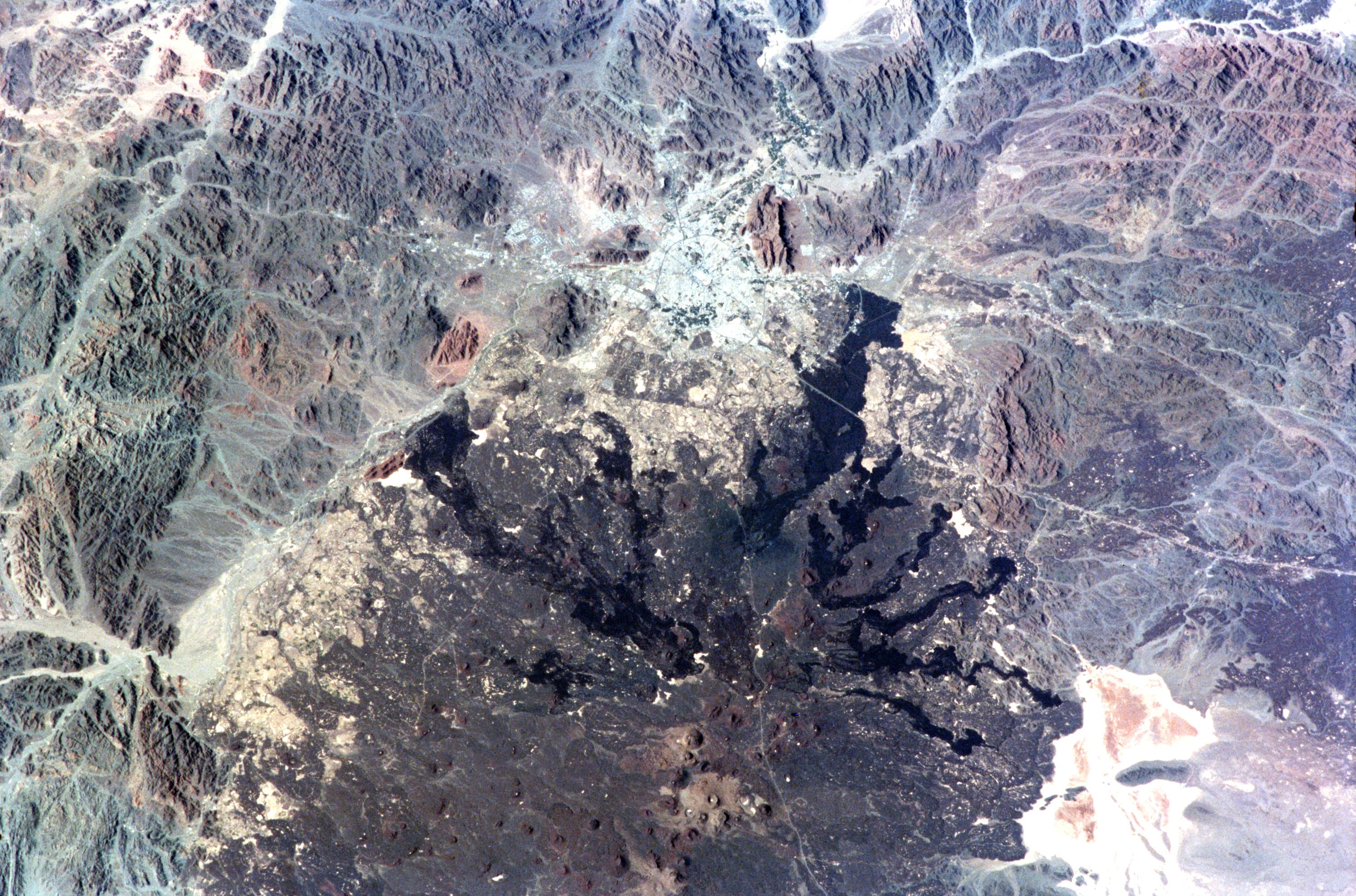
The largest volcanic field in Saudi Arabia, stretching south of Medina across twenty thousand square kilometers with more than nine hundred volcanic vents. Its last major eruption in 654 AH (1256 CE) sent lava flows toward the holy city, stopping less than four kilometers away.
Plan your visit
Practical information verified separately from the historical record.
Before you go: Check with the operator or a local guide before departure; field access details have not yet been verified.
Why visit?
Explore one of the most thoroughly documented volcanic landscapes in Islamic history, where classical Arab historians recorded eruptions under Caliph Umar and again in the Ayyubid era.
Harrat Rahat ranks as the largest volcanic field in Saudi Arabia and among the largest in the entire Arabian Peninsula. It extends more than three hundred kilometers between Medina and the al-Ula region, covering roughly twenty thousand square kilometers. The harrah contains more than nine hundred volcanic vents and more than one hundred and fifty lava flows stacked in layers, with volcanic activity beginning around ten million years ago and continuing into historical times.
Muslim historians recorded two eruptions of exceptional note. The first occurred during the caliphate of Umar ibn al-Khattab around 641 CE. The second, in 1256 CE under the Ayyubids, saw lava pour from six parallel volcanic cones and advance twenty-two kilometers toward Medina before halting less than four kilometers from the city, an event that caused widespread alarm and was carefully documented in classical Arabic sources.
Because Harrat Rahat lies so close to Medina, it carries both geological and cultural weight. It is one of the earliest volcanic events recorded in Islamic historiography and remains a striking landscape of black basalt, cinder cones, and lava channels visible across the Hijaz.