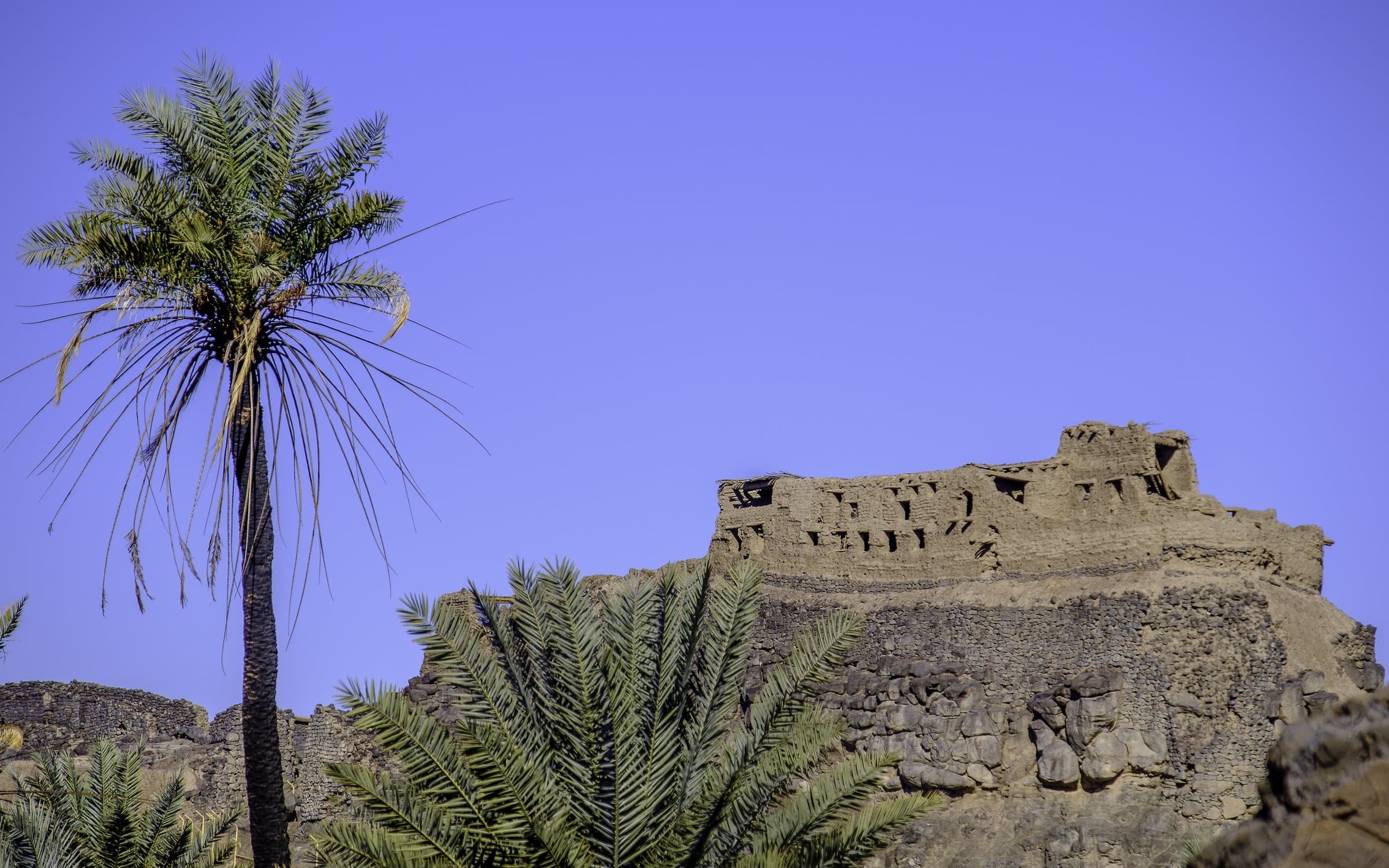
Khaybar Oasis
Khaybar Oasis
One of the largest date-palm oases in Arabia, home to Arab Jewish tribes before and after Islam, a flourishing agricultural and commercial center whose recent excavations revealed a fortified Bronze Age city from 2400 BCE and a fifteen-kilometer wall with seventy-seven towers.
Plan your visit
Practical information verified separately from the historical record.
Access: واحة واسعة ومعالم متباعدة؛ استخدم جولة أو سيارة وتحقق من نقاط الدخول المفتوحة.
Before you go: Check with the operator or a local guide before departure; field access details have not yet been verified.
Why visit?
Explore four millennia of oasis civilization from Bronze Age fortifications through early Islamic treaties to living palm groves in Medina Province.
Khaybar lies in a volcanic highland of the Hijaz northwest of Medina, where abundant springs and wells sustain one of the largest oases in Arabia. For millennia its date groves and fields supported a dense network of fortified settlements perched on basalt hills. Long before the Islamic period, Jewish Arab communities farmed and defended the oasis, maintaining strongholds such as al-Qamus and as-Sa'b that still dominate the skyline.
The oasis is also known from early Islamic history for the campaign of 7 AH (628 CE), when Muslim forces negotiated the surrender of its fortresses. That military episode is commemorated elsewhere; this site emphasizes Khaybar as a living landscape of agriculture, hydrology, and architecture. Archaeological survey has recorded ancient field systems, cisterns, and structures spanning pre-Islamic and medieval periods.
Khaybar's black basalt country, palm gardens, and ruined towers offer a picture of how oasis civilization persisted in harsh terrain through careful water management and hilltop defense. Visitors approaching Khaybar for its archaeology and environment encounter a place where trade routes, volcanic soil, and human engineering combined to create one of the most productive and contested oases in the history of the Hijaz.