Marr al-Dhahran
Marr al-Dhahran
Batan Marr / Marr al-Zahran in the gazetteers, Wadi Fatimah and al-Jumum today: a Hajj-road station between Madinah and Makkah, and the camp of the conquest army on the night before Makkah in 8 AH.
Plan your visit
Practical information verified separately from the historical record.
Before you go: Check with the operator or a local guide before departure; field access details have not yet been verified.
Why visit?
The last camp before Makkah on the night of the conquest, and proof that the Prophet’s Hajj road was a watered wadi.
Marr al-Zahran is the gazetteer name — also Batan Marr — of a broad wadi northwest of Makkah. Yaqut and al-Bakri record it. The modern name is Wadi Fatimah; al-Jumum is its chief town. Springs once fed farms; some water was later taken to Jeddah in the Aziziyya project of 1366 AH.
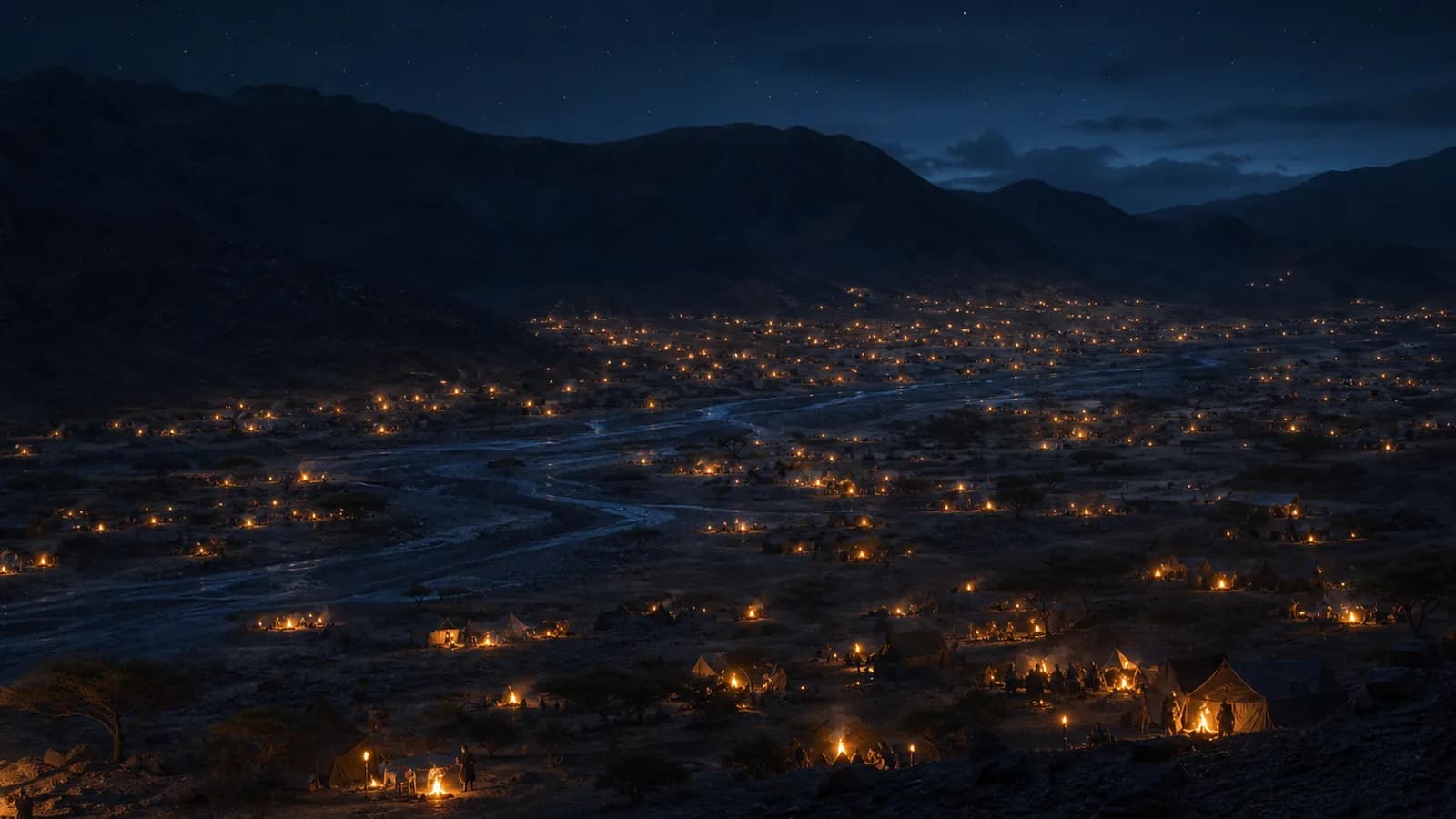
Ibn Ishaq (via Ibn Hisham) and Ibn Kathir place the Prophet here in 8 AH / 630, with a host conventionally given as about ten thousand, on the night before the conquest of Makkah. Fires were lit; Abu Sufyan came out, met al-Abbas, and entered Islam before a generally bloodless entry next day. Ten thousand is a sira figure, not a roll. The wadi then remains a station on the Madinah–Makkah Hajj road, a stage of some twenty-nine kilometres from Makkah in the manazil books.
Do not confuse this camp with Rabigh coastal bivouacs, and do not treat a painted reconstruction of the fires as a document. The pin is the wadi at al-Jumum, not a single gully.